When teams compare gas detection equipment, purchase price usually gets most of the attention. But the detector itself is only part of the long-term expense. Gas detector maintenance costs can include calibration, sensor replacement, technician labor, shipping, downtime, spare equipment, batteries, and routine performance checks. For facilities operating multiple detectors, these recurring expenses can eventually matter as much as the initial capital cost.
That is why buyers should evaluate maintenance before selecting a detector, not after installation. A system that costs less upfront can become expensive if routine sensor service requires specialized labor or removes equipment from operation.
What Goes Into Gas Detector Maintenance Costs?
Maintenance costs vary by detector type, gas, operating environment, and manufacturer requirements. Still, most facilities should budget for several common categories:
- Sensor replacement
- Calibration or recalibration
- Functional testing
- Technician labor
- Replacement batteries or battery maintenance
- Cleaning and inspection
- Shipping equipment or sensors
- Spare instruments needed during servicing
- Administrative time for ordering and service coordination
- Monitoring downtime
Some of these expenses are obvious. Others are easy to overlook.
For example, replacing a sensor might appear to be a simple parts expense. If the instrument then needs to be shipped to the manufacturer, professionally calibrated, documented, and returned before it can go back into service, the actual cost is considerably higher.
That is where detector architecture becomes important.
Sensor Replacement Is a Recurring Ownership Cost
Electrochemical gas sensors do not last forever. Their sensitivity changes with age, environmental conditions, use, and exposure.
Subscribe to receive our monthly round-up of articles.
InterScan recommends replacing many of its sensors approximately every three months under typical operating conditions. Exposure to gas concentrations above the intended measurement range can also create a reason to replace a sensor sooner.
This means buyers should treat sensors as a predictable operating expense rather than an unexpected repair.
When estimating gas detector maintenance costs, ask:
- What does each replacement sensor cost?
- What is the expected replacement interval?
- Can facility personnel replace it?
- Does the detector require recalibration afterward?
- Does the instrument have to leave the facility?
- How long will the detector be unavailable?
That final question can have a much larger financial impact than the price of the sensor itself.
Calibration Can Add Labor and Downtime
Calibration is another important maintenance consideration.
The GASD 8000 manual explains that periodic calibration compensates for decreased sensor sensitivity and helps maintain measurement accuracy. Because calibration frequency depends on instrument use and gas exposure, there is no universal interval, although the manual provides six months as a general rule of thumb for regular use.
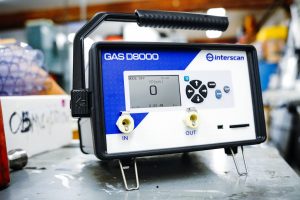
GASD 8000
Traditional calibration also requires additional resources. Facilities may need certified calibration gas, regulators, tubing, sample bags, trained personnel, and time to perform and document the procedure.
Those costs multiply when a site maintains a fleet of detectors.
AccuSafe documentation similarly notes that sensor performance should be checked periodically and identifies application conditions, environmental conditions, regulations, and accuracy requirements as factors affecting calibration needs. Its documentation recommends a three-month recalibration interval for its sensor cartridges.
For buyers comparing equipment, the relevant question is not simply whether a detector can be calibrated. It is how much work routine calibration creates over the instrument’s operating life.
Downtime Has a Cost Too
Downtime is one of the most frequently ignored gas detector maintenance costs.
When a detector leaves service for sensor replacement or calibration, the facility still has a monitoring requirement. That may mean using a spare instrument, rescheduling work, assigning personnel differently, or temporarily operating with reduced monitoring coverage.
A detector that requires several days of service can therefore create expenses that never appear on a maintenance invoice.
InterScan developed its Interchange Sensor System specifically to address this issue. The system uses pre-calibrated replacement sensors that users can remove and replace without tools. The process consists of releasing the existing sensor, installing the replacement, and resetting the device. InterScan describes the system as a zero-downtime approach to routine sensor replacement.
Learn more about the InterScan Interchange Sensor System.
For facilities with several monitoring points or portable analyzers, eliminating a return-to-factory step can substantially simplify maintenance planning.
Pre-Calibrated Sensors Change the Cost Equation
Sensor price alone does not provide a useful comparison between competing gas detectors.
Consider two systems with similarly priced replacement sensors. With one system, a technician installs the sensor and then performs calibration with certified gas. With another, a pre-calibrated cartridge can be installed directly.
Even if the cartridges cost the same, their total maintenance costs are different.
InterScan replacement sensors arrive pre-calibrated, and its SensorExpress program can automatically supply new sensors according to the customer’s replacement requirements. The company also offers individual sensor ordering for facilities that prefer to manage replacement schedules internally.
This model helps reduce several indirect expenses:
- Technician time spent replacing sensors
- Calibration labor associated with routine sensor changes
- Shipping of complete instruments for standard sensor service
- Monitoring interruptions
- Administrative time spent tracking replacement orders
SensorExpress also provides an option for automatically scheduled deliveries, helping facilities avoid finding out that a replacement sensor is unavailable when one is needed.
Budget for the Entire Detector Fleet
Maintenance becomes particularly important when organizations move from one or two instruments to a larger deployment.
Suppose a facility operates 20 detectors. A 30-minute maintenance process suddenly represents 10 labor hours. If each unit also requires shipping or several days away from the site, the organization may need additional spare equipment.
For this reason, buyers should calculate annual gas detector maintenance costs across the expected fleet.
A basic annual estimate should include:
- Number of detectors
- Number of sensor replacements per detector
- Cost per sensor
- Calibration supplies
- Technician hours
- Shipping expenses
- Number of spare detectors required
- Estimated downtime per maintenance event
Running this calculation over three to five years gives procurement and safety teams a much more realistic comparison than purchase price alone.
Maintenance Should Be Part of Detector Selection
Gas detection specifications such as measuring range, detection limit, accuracy, response time, and target gas remain critical. Maintenance should not replace those considerations.
It should sit beside them.
A detector must first provide the appropriate measurement performance for the application. Once several systems meet those requirements, serviceability becomes an effective way to compare long-term value.
InterScan’s GASD 8000 portable gas detector supports sensors for 21 gases and uses active sample draw for portable monitoring. Its Interchange Sensor System is designed to let users replace sensors without tools or returning the entire detector for routine sensor replacement.
For continuous fixed monitoring, AccuSafe uses electrochemical sensing in a system designed for permanent facility monitoring.
The right architecture depends on the application, but the purchasing principle remains the same: compare what the detector costs to own, not simply what it costs to buy.
When evaluating your next gas detection system, include sensor replacement, calibration, labor, downtime, and replacement logistics in the budget from the beginning. InterScan’s serviceable detector platforms and Interchange Sensor System are designed to reduce the work associated with routine sensor maintenance while keeping monitoring available. Explore InterScan gas detection solutions and discuss which configuration best fits your facility’s monitoring and maintenance requirements.
Frequently Asked Questions
How much should facilities budget for gas detector maintenance costs?
There is no universal figure because costs depend on detector quantity, sensor type, replacement interval, calibration requirements, labor rates, and operating conditions. Buyers should calculate sensor, calibration, labor, shipping, spare-equipment, and downtime costs over several years rather than relying only on purchase price.
How often do gas detector sensors need to be replaced?
Replacement intervals depend on the sensor and application. InterScan states that many of its sensors should typically be replaced approximately every three months, assuming proper maintenance and limited exposure above the sensor’s intended measuring range. Heavy or excessive exposure may require earlier replacement.
Can sensor design reduce gas detector maintenance costs?
Yes. A user-replaceable, pre-calibrated sensor can reduce technician labor, calibration work, shipping, and equipment downtime. InterScan’s Interchange Sensor System is designed to allow sensor replacement without tools and without sending the complete detector to the manufacturer for routine sensor replacement.