Peracetic Acid Monitoring in Healthcare Disinfection and Food Sanitation is becoming increasingly important as facilities rely on peracetic acid, or PAA, for effective microbial control while also managing worker exposure. PAA is a strong oxidizing agent used in healthcare sterilization, surface disinfection, food processing, beverage production, and equipment sanitation. Its effectiveness is well established, but the same chemical properties that make it useful against microorganisms can create respiratory, eye, and skin hazards when airborne concentrations increase.
For facilities using PAA routinely, monitoring the surrounding air provides information that process controls, ventilation systems, and chemical handling procedures cannot provide on their own. It gives safety teams direct insight into what workers may actually encounter during normal operations, sanitation cycles, maintenance, and unexpected releases.
Why Peracetic Acid Is Used for Disinfection
Peracetic acid is used because it works quickly against a broad range of microorganisms. In healthcare applications, it can be used in low-temperature disinfection and sterilization processes involving instruments that may not tolerate conventional high-temperature methods.
The CDC notes that peracetic acid is highly biocidal and remains effective in the presence of organic material. It is also used in automated systems for processing medical, surgical, and dental instruments, including endoscopes and arthroscopes.
The food industry uses PAA for similar reasons. Applications can include:
- Sanitizing food-contact surfaces
- Treating processing equipment
- Sanitizing containers and packaging
- Produce washing
- Poultry and meat processing
- Beverage production
- Cleaning production lines
The FDA also recognizes uses of peracetic acid within food processing regulations. This makes PAA useful across industries where controlling microorganisms is essential, but it does not remove the need to understand airborne exposure.
Why Airborne PAA Requires Attention
Peracetic acid solutions generally contain a mixture of PAA, hydrogen peroxide, acetic acid, and water. Depending on how the product is applied, workers can encounter PAA as vapor, aerosol, or a combination of both.
Subscribe to receive our monthly round-up of articles.
Spraying, fogging, open handling, equipment leaks, and certain cleaning processes can increase the possibility of material entering the surrounding air.
NIOSH describes acute peracetic acid exposure as irritating to the eyes, respiratory tract, and skin. Research in healthcare and food-processing environments has also examined worker symptoms and airborne concentrations associated with PAA-containing products.
There is currently no OSHA permissible exposure limit or NIOSH recommended exposure limit specifically for peracetic acid. ACGIH has established a short-term exposure limit of 0.4 ppm, measured as inhalable fraction and vapor.
The absence of an OSHA PEL makes Peracetic Acid Monitoring in Healthcare Disinfection and Food Sanitation especially relevant. Facilities still need practical data to evaluate exposure, investigate complaints, check engineering controls, and identify abnormal conditions.
Monitoring Peracetic Acid in Healthcare Facilities
Healthcare environments can involve PAA in several different processes. Sterile processing departments are an obvious example, but monitoring may also be relevant around disinfection areas, environmental services operations, automated processing systems, chemical storage locations, and waste-handling points.
Interscan discusses several chemical hazards associated with healthcare gas detection, including peracetic acid, hydrogen peroxide, ethylene oxide, and other compounds used for disinfection or sterilization.
A useful monitoring strategy should consider where and when concentrations could change. That can include:
- Loading and unloading sterilization equipment
- Handling concentrated chemical products
- Changing containers or chemical supplies
- Cleaning treatment equipment
- Investigating suspected leaks
- Performing maintenance
- Checking rooms after a sterilization or disinfection cycle
- Evaluating ventilation performance
Portable monitoring is particularly useful when industrial hygiene or safety personnel need to move between these locations.
The GASD 8000 is designed for portable trace-gas measurement and supports a peracetic acid sensor. Its continuous air exchange allows operators to evaluate changing conditions while surveying different areas.
The instrument also provides data logging through an integral SD card. Recorded measurements can help teams compare locations, review a sanitation event, investigate elevated readings, or document conditions during specific tasks.
For more background on the hazards associated with chemical sterilants, see Interscan’s article on hazardous gases in healthcare facilities.
Peracetic Acid Monitoring in Food Sanitation
Food and beverage facilities present a different monitoring environment, but many of the same principles apply.
PAA can be used repeatedly during sanitation and production. Workers may spend significant time near chemical dosing systems, spray applications, wash lines, conveyor sanitation systems, bottle or container treatment equipment, and clean-in-place processes.
NIOSH has evaluated PAA exposure in poultry and beverage-processing facilities. These investigations demonstrate why the location and task matter when assessing exposure. A single measurement taken far from the sanitation process may not represent what an employee experiences closer to the source.
Peracetic Acid Monitoring in Healthcare Disinfection and Food Sanitation should therefore focus on how the chemical is actually used.
Portable monitoring can help safety personnel investigate:
- Sanitation activities with higher chemical usage
- Chemical mixing and dosing areas
- Areas with limited ventilation
- Employee complaints of irritation or strong odors
- Equipment suspected of leaking
- Changes in sanitation procedures
- Conditions before and after ventilation adjustments
The objective is not simply to generate an alarm. Good monitoring provides information that helps a facility understand when, where, and why concentrations change.
When Fixed Monitoring Makes Sense
Portable measurements are valuable for surveys and targeted investigations, but facilities with ongoing PAA processes may also need continuous monitoring at specific locations.
The AccuSafe fixed gas detection system provides continuous monitoring through distributed sensor modules. The system can be useful when a facility has identified locations where PAA needs to be monitored continuously rather than checked periodically.
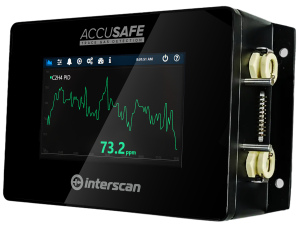
Accusafe
Fixed detection can be considered near chemical storage areas, sanitation systems, sterilization equipment, processing lines, or other points where a release could occur repeatedly.
A combined approach can also make sense. Fixed detectors provide continuous coverage at known locations, while portable instruments allow personnel to investigate conditions elsewhere.
This approach aligns the monitoring equipment with the actual process rather than expecting one detector configuration to address every exposure scenario.
What to Look for in a PAA Monitoring Program
A practical monitoring program should do more than place a detector in the room. Facilities should consider:
- Where PAA is stored, mixed, transported, and used
- Which tasks have the greatest potential for airborne release
- Whether continuous or periodic measurement is appropriate
- How quickly concentrations can change
- Where employees spend time during sanitation or sterilization
- Whether measurement data should be recorded for later analysis
- How alarms will trigger investigation or corrective action
- How sensors will be maintained and replaced
The appropriate detection range also matters. When one toxic gas drives the monitoring requirement, an instrument designed around that specific gas can provide more useful information than a general-purpose meter whose sensor package is not optimized for the hazard.
Interscan explores this distinction further in its discussion of trace-gas instruments versus standard four-gas monitors.
Frequently Asked Questions
Why is peracetic acid monitoring important in healthcare?
PAA is used for disinfection and sterilization but can irritate the respiratory tract, eyes, and skin when workers are exposed. Air monitoring helps facilities identify elevated concentrations, assess specific tasks, evaluate controls, and investigate possible releases.
Where should peracetic acid be monitored in food facilities?
Monitoring locations depend on the process. Common areas to evaluate include chemical dosing systems, wash lines, sanitation stations, container treatment equipment, chemical storage areas, and locations where employees report irritation or strong chemical odors.
Should a facility use portable or fixed peracetic acid detectors?
It depends on the monitoring objective. Portable detectors are useful for surveys, troubleshooting, maintenance, and task-based measurements. Fixed systems are better suited to continuous monitoring at known locations. Many facilities can benefit from using both approaches.
Peracetic acid gives healthcare and food-processing operations an effective tool for controlling microorganisms, but sanitation performance and worker safety need to be managed together. Reliable gas measurements help teams understand conditions around real processes rather than relying only on assumptions about chemical use or ventilation.
For facilities developing or updating a Peracetic Acid Monitoring in Healthcare Disinfection and Food Sanitation program, explore Interscan gas detection solutions and the GASD 8000 portable gas detector for trace-level PAA measurement. For applications that require continuous monitoring at fixed locations, review the AccuSafe fixed gas detection system to build a monitoring approach around your facility and process.