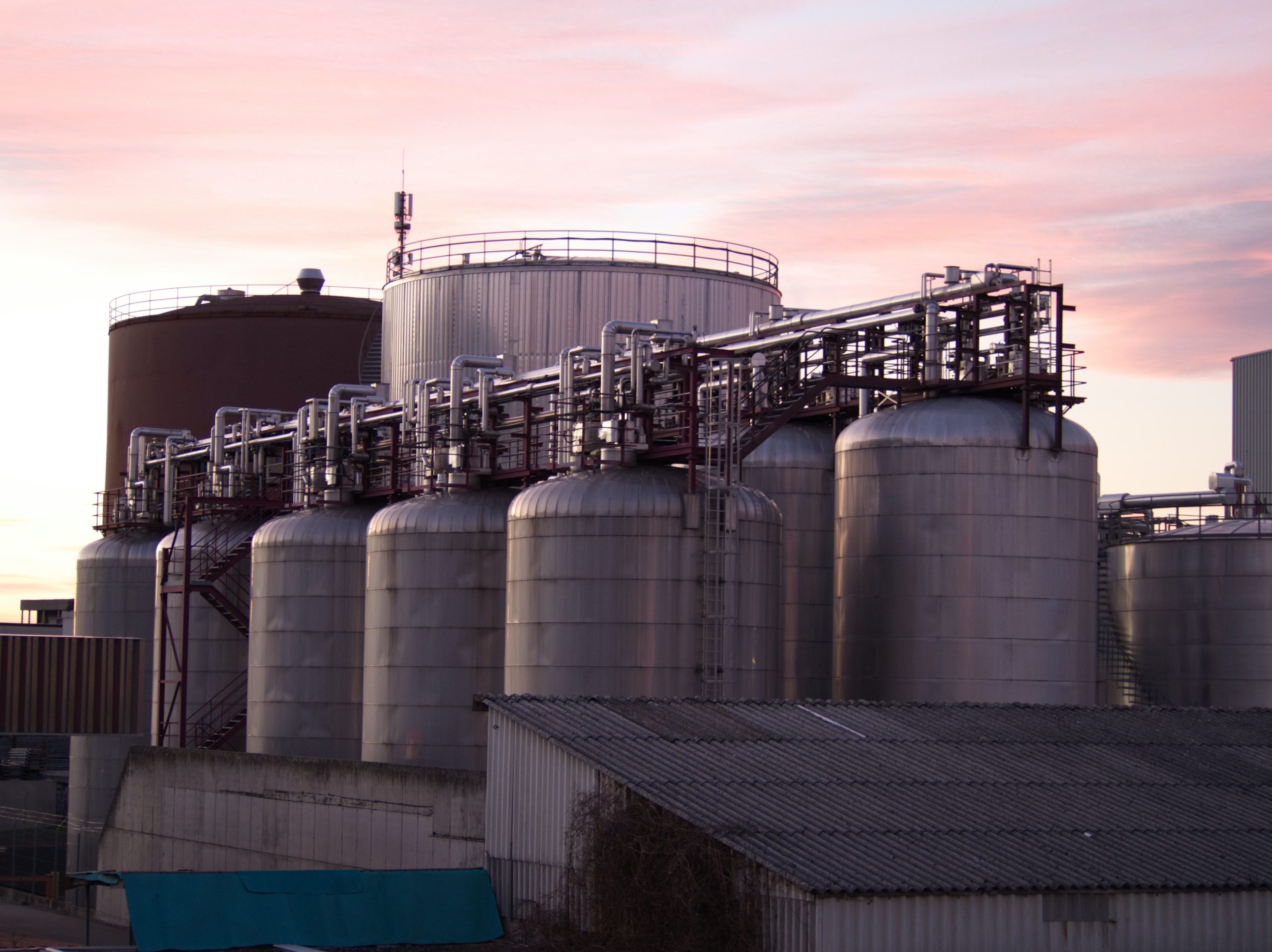
Chemical processing facilities often need to check toxic gas concentrations in locations where flammable gases or vapors may also be present. In those environments, measurement performance is only part of the instrument selection process. The detector also has to meet the hazardous-location requirements of the area where technicians will use it. GASD IS for Toxic Gas Checks in Classified Chemical Processing Areas addresses both concerns by combining low-level toxic gas measurement with UL-certified intrinsic safety for hazardous locations.
For chemical plants, refineries, process units, tank areas, and other facilities handling hazardous chemicals, this combination allows technicians to bring portable toxic gas monitoring closer to the actual point of concern.
Why Classified Chemical Processing Areas Require a Different Approach
A classified area is a location where combustible gases or vapors may be present under normal or abnormal operating conditions. Electrical equipment used in these areas has to be selected according to the applicable hazardous-location classification.
This is where intrinsic safety becomes important.
An intrinsically safe instrument is designed so that its electrical and thermal energy remain below levels capable of igniting the atmosphere under the conditions covered by its certification. Rugged construction alone does not provide this protection, and neither does portability.
The GASD IS intrinsically safe gas detector is UL certified for:
- Class I, Division 1, Groups A, B, C, and D
- Class I, Zone 0, AEx ia IIC T4 Ga in the United States
- Ex ia IIC T4 Ga in Canada
These classifications make the analyzer suitable for use directly within the hazardous locations covered by its certification.
Subscribe to receive our monthly round-up of articles.
For a broader discussion of these requirements, see InterScan’s guide to selecting gas detection for classified and combustible environments.
Toxic Gas Risk Does Not Always Follow Flammability Risk
One important point in chemical processing is that toxicity and flammability are separate issues.
A chemical may create an occupational exposure concern at concentrations far below those needed to create a combustible atmosphere. As a result, monitoring only for explosive conditions does not necessarily provide the information industrial hygiene or safety teams need.
Chemical manufacturing operations can involve gases such as ammonia, chlorine, hydrogen sulfide, formaldehyde, hydrogen chloride, ethylene oxide, sulfur dioxide, and other hazardous compounds.
InterScan configures the GASD IS for targeted toxic gas measurement and supports detection across a range of gases, depending on the sensor selected. The system is designed for extremely low-level sensitivity, with measurement characteristics depending on the particular gas and configuration.
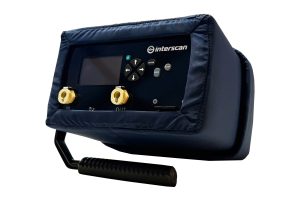
GASD IS
That makes GASD IS for Toxic Gas Checks in Classified Chemical Processing Areas particularly relevant when teams know which chemical they need to monitor and need concentration data near equipment, piping, vessels, or process operations.
Active Sampling Brings the Measurement to the Point of Concern
The GASD IS uses an integral pump for active and continuous sampling.
That is useful in chemical plants because technicians are rarely interested only in the general atmosphere of a large room. They may need to investigate a specific valve, flange, pump seal, process connection, transfer point, or other potential source.
Active sampling can support tasks such as:
- Checking around suspected leak sources
- Surveying process equipment during maintenance
- Measuring concentrations near valves and connections
- Drawing samples through appropriately configured tubing
- Monitoring changing concentrations during a specific task
- Verifying conditions at predetermined inspection points
Using a certified instrument directly in the classified area can also reduce reliance on long remote sampling lines connected to equipment positioned outside the hazardous location.
Shortening the sample path can simplify field measurements and keep the detector closer to the atmosphere the technician actually wants to evaluate.
Real-Time Data Provides More Context Than a Single Spot Reading
A one-time measurement can answer what the concentration was at a particular moment. Chemical process conditions, however, often change.
Valves cycle. Equipment heats up. Process pressures vary. Maintenance activities disturb fittings. Production steps start and stop.
The GASD IS continuously draws air across its sensor while measuring and provides a digital concentration readout along with real-time graphical information. Audible and visual alarms can also be configured to warn users when concentrations reach established thresholds.
This gives technicians the ability to watch how the concentration behaves instead of recording only an isolated value.
InterScan also includes integral data logging, allowing measurements to be retained for later review. Recorded data can support exposure documentation, troubleshooting, process investigations, and comparisons between inspection periods.
For more on this distinction, InterScan’s comparison of continuous gas detectors and colorimetric tubes explains how continuous monitoring provides information that a single spot check cannot.
Portability Matters During Chemical Plant Surveys
Fixed detection systems are valuable when gas hazards are associated with known, permanent locations. Portable analyzers address a different requirement.
A technician may need to move through several production areas, inspect equipment after maintenance, investigate an odor complaint, or perform task-specific industrial hygiene measurements.
The GASD IS is designed for portable operation and provides up to eight hours of continuous service. Its sunlight-visible transflective LCD supports field use, while its anodized aluminum enclosure provides a durable platform for industrial environments.
This portability lets one analyzer support multiple targeted checks instead of being permanently tied to a single monitoring point.
For facilities needing continuous monitoring at fixed process locations, InterScan also offers the AccuSafe fixed-point gas detection system, which supports scalable continuous monitoring across multiple sensor locations.
GASD IS Versus a General-Purpose Portable Detector
The classified location itself may determine which portable analyzer is appropriate.
InterScan’s GASD IS and GASD 8000 share several useful capabilities, including active sampling, low-level toxic gas measurement, real-time concentration displays, alarms, and data logging.
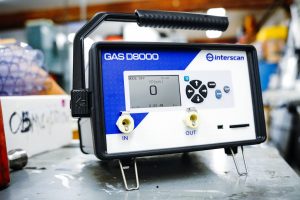
GASD 8000
The major distinction is hazardous-location suitability.
The GASD 8000 is intended as a portable industrial gas analyzer for general monitoring applications. GASD IS adds UL-certified intrinsic safety for specified Class I, Division 1 and Zone 0 environments.
Facilities deciding between the platforms can review InterScan’s detailed comparison of GASD IS vs GASD 8000.
The practical selection process should start with several questions:
- Is the measurement location classified?
- What hazardous-location certification is required?
- Which toxic gas needs to be measured?
- What concentration range is important?
- How close does the technician need to get to the source?
- Does the application require continuous readings and logged data?
If intrinsic safety is required, that condition should be established before comparing secondary features.
Building Toxic Gas Checks Around the Actual Process Risk
Gas detection works best when monitoring procedures reflect how chemicals are actually handled.
For chemical processing facilities, that means looking beyond a generic portable detector specification. Teams should consider the target chemical, sensor range, hazardous-location classification, sampling method, inspection locations, alarm thresholds, and the way measurement records will be used.
GASD IS for Toxic Gas Checks in Classified Chemical Processing Areas gives industrial hygiene and safety teams a way to combine targeted toxic gas measurement with the hazardous-location certification required for demanding process environments.
When toxic gas measurements need to be taken inside classified chemical processing areas, review the InterScan GASD IS and contact InterScan to discuss the target gas, measurement range, sampling configuration, and hazardous-location requirements for your facility.
Frequently Asked Questions
What makes GASD IS suitable for classified chemical processing areas?
GASD IS is UL certified as intrinsically safe for Class I, Division 1, Groups A, B, C, and D locations and for specified Class I, Zone 0 applications in the United States and Canada. This allows it to operate in hazardous locations covered by those classifications where combustible gases or vapors may be present.
Can GASD IS be used for low-level toxic gas measurements?
Yes. InterScan designed GASD IS for extremely low-level toxic gas detection, with sensitivity and measurement range depending on the selected gas and sensor configuration. It also uses active continuous sampling to draw the sample across the sensor.
When should a facility choose GASD IS instead of GASD 8000?
GASD IS becomes the more appropriate choice when measurements must be made in a classified hazardous location requiring its intrinsic safety certifications. For general portable toxic gas monitoring in non-classified environments, GASD 8000 may be another option. The facility should always match the detector’s certification, gas configuration, and measurement range to the specific application.