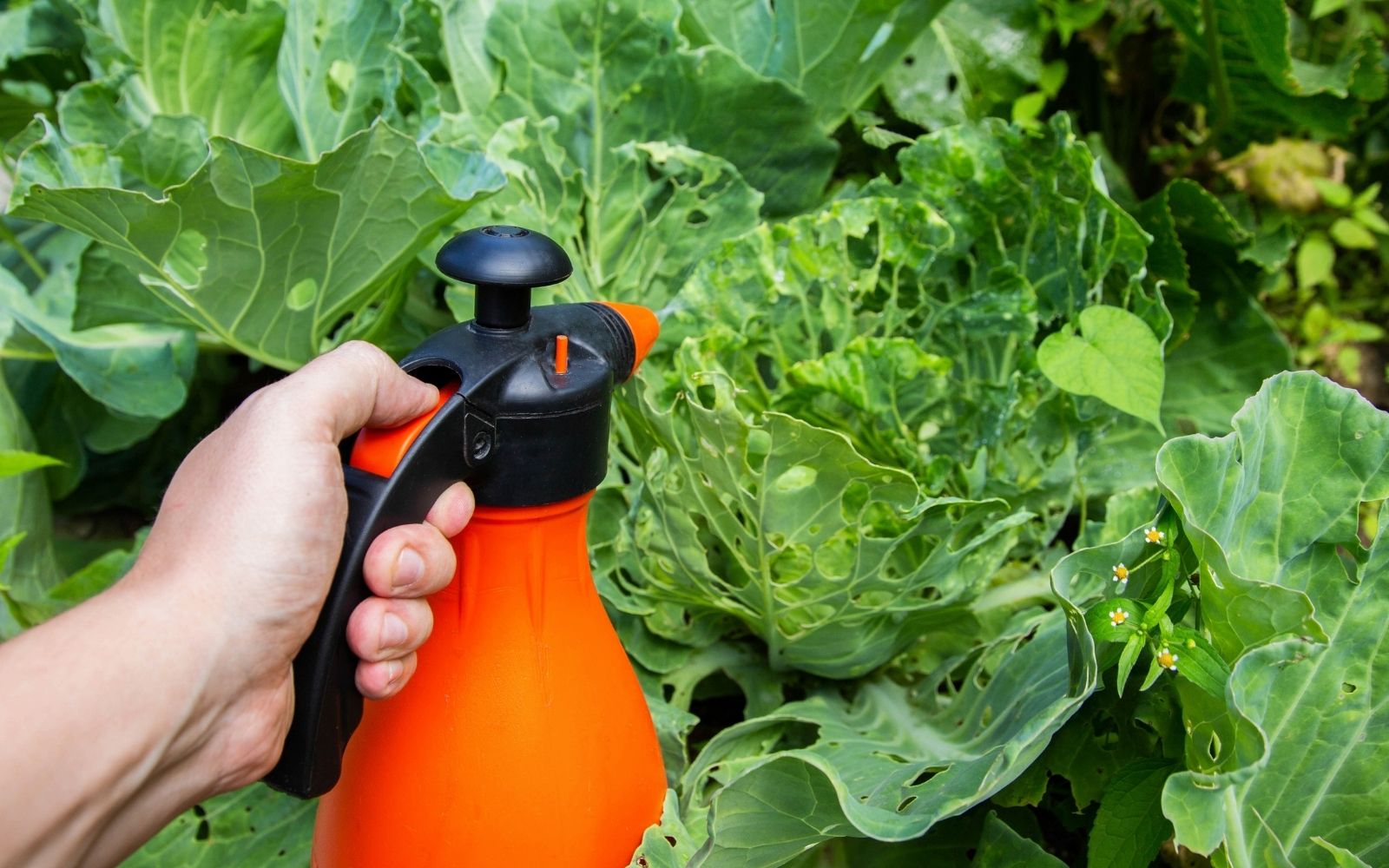
- Agricultural gas pollutants that must be monitored are ammonia, nitrogen oxides, methane, carbon dioxide, sulfur dioxide, particulate matter, volatile organic compounds, and ground-level ozone.
- Particulate matter, ozone, nitrogen dioxide, and sulfur dioxide are public health concerns.
- Agriculture is one of the main contributors of the three major greenhouse gases causing climate change- carbon dioxide, methane, and nitrous oxide.
- Agriculture is the main source of global ammonia, which, along with nitrogen oxide pollution, leads to nitrogen deposition, a major global change.
Though agriculture is usually associated with land and water pollution, it is also a major source of air pollutants. In the USA, agriculture results in 17,900 air-quality–related deaths each year, while in Europe, 45% of premature mortality is attributable to agricultural air pollution. Some agricultural pollutant gases can travel more than 500 km from their sources and affect populations beyond the rural agricultural community. This article lists the major gases that are agricultural pollutants, for which environmental monitoring and control are necessary.
Agricultural Pollution
Agricultural pollution arises from non-point sources. Though agriculture is necessary, and the chemicals have boosted production in intensive cultivation systems, the environmental footprint and health consequences are severe. It leads to ecosystem degradation, biodiversity losses, and climate change. The gases reduce air quality and cause respiratory diseases that can lead to premature deaths.
The use of pesticides and fertilizers, livestock, waste management, and the burning of crop residues are the main activities that release air pollutants, including greenhouse gases. Around 20% of global greenhouse gases are produced by agriculture.
The gaseous pollutants produced by agriculture are:
- Ammonia
- Nitrogen oxides
- Particulate matter
- Carbon Dioxide
- Methane
- Sulfur dioxide
- Volatile organic compounds
- Ozone
Some gases, such as ammonia, nitrogen oxides, carbon dioxide, and methane, are not only environmental pollutants but also agricultural occupational hazards when present at high concentrations indoors. Agricultural workers face some of the highest occupational risks from these gases due to limited awareness and training in handling chemical hazards. Moreover, many countries have few or no regulations to protect farm workers from these chemical hazards.
Similarly, the regulations to limit the gases produced in agriculture from causing pollution is also not thorough enough. While strict ambient standards exist for nitrogen oxide levels and fine particulate matter, there are still no ambient ammonia concentration standards, despite ammonia being one of the main air pollutants in agriculture. Ammonia is monitored only through emission control. Policy interventions and the adoption of sustainable practices and technologies are essential to reduce air pollution levels on farms and in supply chains.
Several countries and regions have taken steps to reduce agricultural air pollution, but the measures so far have not been sufficient. Knowing the sources of each gas in agriculture can help with monitoring and controlling them.
Subscribe to receive our monthly round-up of articles.
-
Ammonia
Ammonia (NH3) is a colorless, pungent, toxic, corrosive, and flammable gas, and one of the main air pollutants produced by agriculture. Agriculture accounts for 81% of global ammonia emissions and 90% of NH3 emissions in Europe. NH3 is released from the use of ammonium fertilizers and livestock production, which account for 66% and 33% of total agricultural ammonia emissions, respectively.
- NH3 emissions have doubled over the last 70 years due to increased use of synthetic ammonium fertilizers.
- Ammonia is released from animal houses, animal manure storage systems, anaerobic digestors of organic matter, and grazing. Regions with high livestock densities contribute to 50% of nitrogen deposition in Europe.
Ammonia causes various environmental and health effects:
- Ammonia emissions contribute to nitrogen deposition, which leads to acidification and eutrophication of soil and water, acid rain, biodiversity loss, plant toxicity, and changes in soil nutrient cycling.
- It can affect the respiratory health of cattle.
- NH3 contributes to the formation of particulate matter, a major air pollutant.
- Effects of ammonia as a pollutant on human health result from the contribution of NH3 to particulate matter formation. NH3 accounts for 30% and 50% of the fine particulate (PM5) fraction in the USA and Europe, respectively.
Ammonia is reactive and is removed from the air within 3 hours to a day, and most deposition occurs within 1 km of sources. However, scientists have found that NH3 gas can be detected in natural ecosystems up to 3 km away from sources.
-
Nitrogen Oxides
The term “nitrogen oxides” typically refers to nitric oxide (NO) and nitrogen dioxide (NO2). These two gases, along with nitrous oxide (N2O), are produced in the agricultural sector. Nitrogen oxides can travel up to 800 km from the source.
Nitrous oxide: Agriculture accounts for 60-70% of the global anthropogenic N2O emissions, which are produced at various points in agriculture.
- Agricultural soil: It is mainly produced in the soil by microbial activity on nitrogen. When excessive amounts of fertilizers are added to the soil, crops cannot use all of it. The remaining nitrogen fertilizers or manure not taken up by plants are converted by microbes into N2O.
- Indirect emissions: Some of the extra nitrogen can leach into the soil and cross boundaries, and N2O is produced as indirect agricultural emissions in the neighboring lands.
- From ammonia: Ammonia emissions are converted to nitric acid in rain, which undergoes nitrification and denitrification in soil to form N2O. Nearly 1% of nitrogen fertilizer is converted to N2O.
Nitrogen dioxide: NO2 is produced by fossil fuel combustion and agricultural vehicles. It is a reddish-brown gas that is soluble in water.
Nitric oxide: NO is produced by the addition of nitrogenous fertilizers and livestock production. Agricultural activities contribute 10% of the tropospheric nitric oxide. It is a colorless, highly reactive gas.
The nitrogen oxides have several environmental and health effects.
- People’s health: Nitrogen dioxide and nitric oxide contribute to the formation of fine particulate matter (PM2.5), which degrades air quality and has severe health consequences. Nitrogen oxides at low levels can irritate the respiratory system and eyes, causing coughing, shortness of breath, nausea, and tiredness. Higher levels can cause spasms, swelling of the throat and upper respiratory tract, reduced oxygenation, and fluid buildup.
- Environment: Nitrogen oxides (NO2 and NO) break down rapidly in the air. Nitrogen oxides react with sunlight to form smog and ozone. Nitrogen oxides can react with other chemicals to form nitric acid, a component of acid rain. NOx forms particulate matter, which is harmful to vegetation and animals. NO2 is also a precursor of ozone, another air pollutant. Nitrous oxide is a potent greenhouse gas with a Global warming potential of 310, which contributes to climate change.
Figure 1: “Contribution of agriculture to the formation of inorganic aerosols and atmospheric particulate matter,” von Schneidemesse et al. 2016. (Image credits: https://www.duh.de/uploads/media/IASS_fact_sheet_01_2016_ammonia_01.pdf)
-
Particulate Matter
About two-thirds of particulate matter (PM) is secondary, formed from primary pollutants such as ammonia, nitrogen oxides, and sulfur dioxide, which act as precursors. The rest is dust, small droplets of water, and other chemicals. Dust is formed during tillage and wind erosion on agricultural lands. Depending on their size, particulate matter is called fine PM (PM2.5), which has diameters below 2.5 micrometers (μm) and coarse PM (PM2.5-10) with a diameter of 2.5 to 10 μm,
Agricultural pollutants are the largest contributors to particulate matter and form a mixture of sulfates, nitrates, and ammonium compounds; see Figure 1. Gaseous ammonia reacts with sulfuric acid and nitric acid to form secondary inorganic aerosols such as ammonium sulfate, ammonium bisulfate, and ammonium nitrate, which form fine particulate matter (PM2.5). Nitrate aerosols are formed from emissions of ammonia and nitric oxide.
Particulate matter has negative environmental and health impacts:
- Environmental: PM pollution can affect crops by interfering with pesticides. PM also increases soil alkalinity, inhibiting crop growth and health. PM reduces visibility, acidifies water bodies, contributes to acid rain, alters nutrient balances in river basins and coastal areas, and depletes soil nutrient levels.
- Health: PM degrades air quality, which has severe health consequences. WHO has declared that there is no safe level for PM exposure, and both acute and chronic exposure are harmful. The organs affected depend on the particle size. Fine PM can enter the bloodstream and reach more organs than coarse PM. There is an increased risk of mortality due to respiratory and cardiovascular diseases. PM pollution also reduces lung function and causes chronic respiratory problems.
Agriculture is a significant source of fine PM in Europe, the eastern USA, and China.
-
Methane
Methane (CH4) emissions in agriculture arise from the anaerobic breakdown in enteric fermentation in ruminant animals and in manure storage. Enteric fermentation is the largest source, and occurs in the rumen or fore-stomach of ruminants such as cattle, sheep, goats, buffalo, and camels. The high water content in manure limits oxygen access, so organic matter breaks down to produce methane rather than carbon dioxide; when properly harnessed, the process produces biogas.
As a pollutant, methane has environmental impacts. It is a greenhouse gas that contributes to climate change, and has a Global Warming Potential (GWP) of 21; that is, methane has 21 times the effect of carbon dioxide in causing global warming.
According to the World Resources Institute, agriculture, accounting for 46%, is the largest contributor to global methane emissions.
- Enteric fermentation produces 27% of global methane emissions
- Rice cultivation accounts for 8% of the global total methane.
- Biomass burning produces 4% of global methane emissions
- Manure produces 3% of global methane emissions.
Methane also contributes to smog or ground-level ozone.
Rising demand for meat and food is expected to increase methane production in the coming decades.
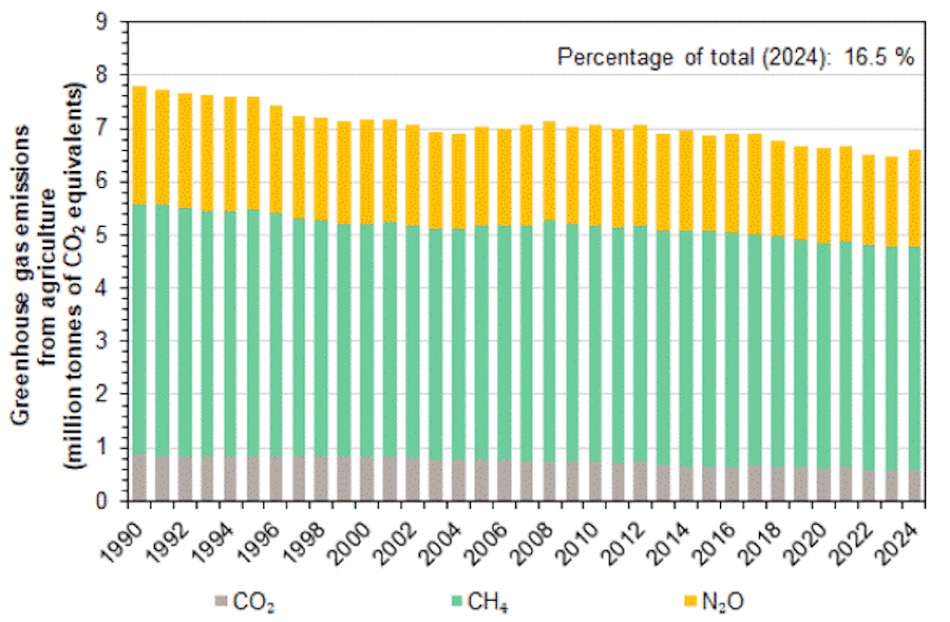
Figure 2: “Development in greenhouse gas emissions in the agriculture sector, broken down into the gases CH4, N2O, and CO2,” BAFU (2026). (Image credits: https://www.bafu.admin.ch/en/greenhouse-gas-inventory-agriculture)
-
Carbon Dioxide
Agriculture produces carbon dioxide (CO₂) in three ways: combustion of fossil fuels, use of urea and lime, and land use change.
- Fossil fuels: Combustion of fossil fuels for running agricultural machines, transporting fertilizers to farms, heating buildings such as greenhouses, and drying crops and grasses releases carbon dioxide.
- Urea and lime: Urea and lime application to soils releases CO2. Urea, a nitrogenous fertilizer applied to the soil, can be hydrolyzed to give CO2. Lime is applied to reduce soil acidity; it dissolves, releasing CO2. Around 45% of the carbon in lime is released as CO2.
- Land-use changes: Forests that act as carbon sinks are still being cut down to make way for new farms. Forests can store more carbon than pastures or croplands, so the creation of farms limits carbon fixation and builds up CO2 levels in the atmosphere.
Carbon dioxide has environmental and health impacts, as it is responsible for 60-70% of the greenhouse effect. The production of CO2 from agriculture is lower than that of methane and nitrous oxide, but remains considerable; see Figure 2.
Climate change is increasing temperatures and altering precipitation patterns, threatening food security and water availability. The increased frequency and intensity of heat waves are causing heat strokes and increasing incidences of respiratory and cardiovascular diseases. Extreme weather and storms damage lives, property, and food and medicine supply chains.
-
Sulfur Dioxide
Sulfur dioxide is produced directly and indirectly in intensive livestock farms and croplands.
- Directly: The combustion of fossil fuel for agricultural machinery and the burning of biomass or crop wastes releases SO2. The gas also forms when elemental sulfur is used as a pesticide. When sulfur reacts with oxygen, it forms SO2, which acts as a pesticide. Elemental sulfur is the most used synthetic pesticide in California and Europe.
- Indirectly: Around 49% of SO2 is produced from hydrogen sulfide emissions from livestock manure from pigs and cattle rearing. H2S decomposes in air to form SO2.
SO2 is a colorless gas that is soluble in water and has various environmental and health impacts:
Health impacts: SO2 is a health risk at concentrations below 1 ppm. Exposure to SO2 causes asthma and lung irritation. A 2017 study showed that children living close to sulfur-treated farms had reduced lung function and asthma, and required rescue medication. It is also a risk to fetal development. Exposure to high levels can require emergency hospital admissions.
Environmental effects: SO2 contributes to the formation of particulate matter, which is a health hazard. SO2 also reacts with water and water vapor to form sulfuric acid, which can contribute to acid rain, which is harmful for crops, trees, and forests.
-
Ozone
Ozone (O3) has three oxygen atoms and is very reactive and a strong oxidizer. It is not directly emitted by agricultural activities. However, many of its components are major agricultural air pollutants, such as nitrogen oxides and volatile organic compounds, which react under sunlight and heat to produce O3. Ozone and its precursors, NOx and VOCs, can travel several hundred kilometers from their sources on air currents.
Ground-level ozone is an important pollutant due to the environmental and health problems it causes.
Environmental problems: Ground-level O3 is the main component of smog. It can also affect the crop growth. C4 crops (sorghum, maize, and switchgrass) are more tolerant of ozone than C3 plants (rice, soybean, and chickpea). Many of the world’s productive agricultural areas have very high levels of ozone.
Health effects: People exposed to high levels of O3 can suffer from breathing problems, asthma, reduced lung function, and other lung diseases. Smog causes 255,000 premature deaths and 750,000 hospital visits.
-
Volatile Organic Compounds
Volatile organic compounds (VOCs) are produced in agriculture from the soil, pesticide applications, manure management, and waste burning. Applying pesticides results in VOC emissions (PVOCs). The pesticide formulation can affect emission rates. For example, in China, emulsifiable concentrates produced the most PVOCs (26.75%), followed by suspension concentrates (17.68%) and wettable powders (17.31%). Since pesticide use is widespread and the chemicals are highly volatile, PVOCs are a significant problem. PVOCs account for 2% of the total VOC emissions in China.
VOCs evaporate rapidly at ambient temperatures.
VOCs combine with nitrogen oxides to form smog and ozone that can harm the environment and people’s health. VOCs also contribute to the formation of secondary organic aerosols that impact air quality
It is necessary to reduce VOC emissions to reduce ozone formation in agricultural areas.
Environmental Monitoring of Agricultural Pollutants
Awareness of agricultural air pollution can support more efficient environmental monitoring. The eight pollutants associated with agriculture must be monitored at crop and livestock farms, as well as the neighboring local areas. For this, precise, robust, and easy-to-use tools are necessary. Interscan produces portable gas analyzers that environmental monitoring professionals can use to measure several major agricultural air pollutants. The instruments provide rapid measurements at ppm (parts per million) and ppb (parts per billion) levels.
Contact Interscan for more information about our gas analyzers for environmental monitoring.
Sources
Abbasi, A., Sajid, A., Haq, N., Rahman, S., Misbah, Z. T., Sanober, G., … & Kazi, A. G. (2013). Agricultural pollution: an emerging issue. In Improvement of crops in the era of climatic changes: Volume 1 (pp. 347-387). New York, NY: Springer New York.
Anisworth, L. (2025, Oct 1). Rising Ozone Pollution and Agriculture: A Stratospheric Challenge for Growers. Retrieved from https://www.ars.usda.gov/oc/utm/rising-ozone-pollution-and-agriculture-a-stratospheric-challenge-for-growers/
Bauer, S. E., Tsigaridis, K., & Miller, R. (2016). Significant atmospheric aerosol pollution caused by world food cultivation. Geophysical Research Letters, 43(10), 5394-5400.
Chen, S., He, Y., Jiang, M., You, Q., Ma, X., Xu, Z., & Bo, X. (2024). Unveiling the importance of VOCs from pesticides applicated in main crops for elevating ozone concentrations in China. Journal of Hazardous Materials, 465, 133385.
Domingo, N. G., Balasubramanian, S., Thakrar, S. K., Clark, M. A., Adams, P. J., Marshall, J. D., … & Hill, J. D. (2021). Air quality–related health damages of food. Proceedings of the National Academy of Sciences, 118(20), e2013637118.
EEA. (2025, Nov 6). Greenhouse gas emissions from agriculture in Europe. Retrieved from https://www.eea.europa.eu/en/analysis/indicators/greenhouse-gas-emissions-from-agriculture?activeAccordion=309c5ef9-de09-4759-bc02-802370dfa366
Feilberg, A., Hansen, M. J., Liu, D., & Nyord, T. (2017). Contribution of livestock H2S to total sulfur emissions in a region with intensive animal production. Nature Communications, 8(1), 1069.
Ferm, M., Marcinkowski, T., Kieronczyk, M., & Pietrzak, S. (2005). Measurements of ammonia emissions from manure storing and spreading stages in Polish commercial farms. Atmospheric Environment, 39(37), 7106-7113.
Government of Canada. (n.d.). Greenhouse gas emissions and agriculture. Retrieved from https://agriculture.canada.ca/en/environment/greenhouse-gases
Hui, K., Yuan, Y., Xi, B., & Tan, W. (2023). A review of the factors affecting the emission of the ozone chemical precursors VOCs and NOx from the soil. Environment International, 172, 107799.
Jayasundara, Susantha. (2015). Re: How does the fertilizer use affect GHG emission?. Retrieved from: https://www.researchgate.net/post/How_does_the_fertilizer_use_affect_GHG_emission/561036e15e9d9775348b4601/citation/download.
Kumari, D., Thakur, A., Tiwari, A. K., & Singh, R. (2024). Types and sources of agricultural pollution: Identifying the different pollutants generated by farming practices and their origins. A comprehensive exploration of soil, water, and air pollution in agriculture, 71.
Lô, S., Dohmen, W., Heederik, D., Weijers, E., van Schothorst, I., Bleeker, A., … & Hoek, G. (2025). Spatial and temporal variability of atmospheric ammonia using a dense network in an area with livestock, residential and natural environments intertwined. Atmospheric Environment, 360, 121394.
Ogwu, M. C., Lori, T., Aliu, O. O., Febnteh, E. B., Izah, S. C., & Abdelkhalek, S. T. (2024). Agricultural air pollution: impacts, sources, and mitigation strategies. In Air Pollutants in the Context of One Health: Fundamentals, Sources, and Impacts (pp. 395-423). Cham: Springer Nature Switzerland.
Raanan, R., Gunier, R. B., Balmes, J. R., Beltran, A. J., Harley, K. G., Bradman, A., & Eskenazi, B. (2017). Elemental Sulfur Use and Associations with Pediatric Lung Function and Respiratory Symptoms in an Agricultural Community (California, USA). Environmental health perspectives, 125(8), 087007. https://doi.org/10.1289/EHP528
Von Schneidemesser, E., Kutzner, R., Münster, A., et al. (2016, June). Agriculture, Ammonia, and Air Pollution. Retrieved from
https://www.duh.de/uploads/media/IASS_fact_sheet_01_2016_ammonia_01.pdf
Well, R. & Pacholski, A. (n.d.). Gaseous nitrogen emissions. Retrieved from https://www.thuenen.de/en/institutes/climate-smart-agriculture/fields-of-activity/gasfoermige-stickstoffemissionen
WHO. (n.d.). Air quality, energy and health. Retrieved from https://www.who.int/teams/environment-climate-change-and-health/air-quality-and-health/health-impacts/types-of-pollutants
Wyer, K. E., Kelleghan, D. B., Blanes-Vidal, V., Schauberger, G., & Curran, T. P. (2022). Ammonia emissions from agriculture and their contribution to fine particulate matter: A review of implications for human health. Journal of environmental management, 323, 116285.
……………