- Fatbergs are formed from a mixture of fat, grease, oil, water, fatty acids, and calcium present in the sewer pipes, which harden around flushed sanitary items.
- Fatbergs can block pipes and cause overflows that pose a public health hazard and cost countries significant funds to remove.
- Personnel going underground are exposed to poisonous, flammable, and asphyxiant gases, infectious diseases, and physical hazards.
As city populations grow, the disposal of large quantities of grease, fat, oil, and flushable wipes by restaurants, meat processors, and households down the drain is increasing the number and size of fatbergs in underground sewers. Utilities are monitoring and removing fatbergs before they grow large enough to cause problems for people and the environment. Utility personnel working to break and remove the fatberg and deglaze the sewers are spending more time in an unsafe and unhealthy environment. Find out what fatbergs are and the dangers they pose to the public and workers.
Fatberg Formation
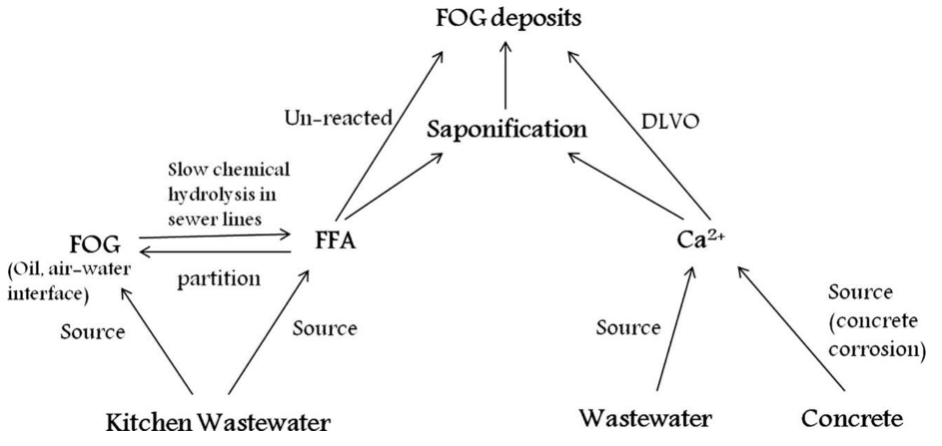
Figure 1: “Mechanism for FOG or fatberg formation (He et al. 2013),” Wallace et al. (2017). (Image credits: 10.1016/j.jenvman.2016.11.003)
A fatberg is a collection of fat, grease, oil, and sanitary products flushed down the drain. The fat and grease stick to non-biodegradable items, forming a hard mixture that clogs drains and requires a drill to break up. People who have encountered a fatberg describe its odor as rotting meat mixed with a smelly toilet!
The term “fatberg” was coined by workers at Thames Water in London to describe the clogs. In the USA, fatbergs are known as FOG, an acronym for fat, oil, and grease. In China, fatbergs are called gutter oil.
The process by which hardening occurs is saponification, which converts lard into hard soap. The components involved in the formation of fatbergs are oily substances (fat, grease, and oil), free fatty acids (FFAs), water, and metal ions such as calcium ions. All four components have to be present for fatbergs to form; see Figure 1.
Fat, grease, and oil accumulate in the pipes and, due to cold temperatures, begin to solidify, adhering to sewer walls. This restricts the flow of wastewater, which carries toilet waste, metallic ions, minerals, and water. Fatty acids are formed during cooking, through natural decomposition or microbial action on fat, grease, and oil. Calcium is present in wastewater from sewers due to microbial corrosion of pipes. Some scientists believe that saponification begins when utensils are cleaned, as alkaline cleaning products react with oils and grease. Other factors, such as pipe diameter, gradients, and age, influence the location of blockage.
Subscribe to receive our monthly round-up of articles.
The fatbergs start by narrowing the diameters of sewer pipes and then completely block them.
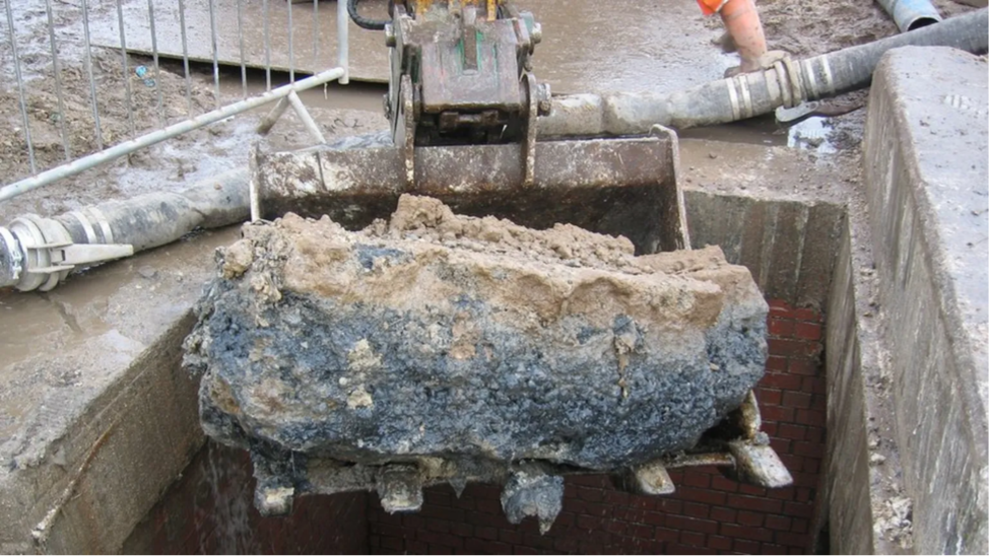
Figure 2. “Fatbergs, like this one unearthed by Scottish Water in one part of Scotland, are a headache for utility companies,” BBC. (Image credits: https://www.bbc.com/news/uk-scotland-edinburgh-east-fife-45494943)
Occurrence
The sources of the materials that lead to fatbergs are sinks and toilets. Restaurants, meat processing plants, and households are responsible for the oil, fat, and grease dumped into drains. Initially, fatbergs were small. During the Industrial Revolution, as cities grew and the amount of cooking waste increased, the size of fatbergs increased. The fatbergs have increased in both number and size recently, even though fat, grease, and oil have always been dumped down the drains. Sewer managers regard the premoistened toilet wipes for babies and adults as the reason for the recent surge in fatbergs. The so-called flushable wipes remain intact and do not break down like toilet paper, providing the building blocks for giant fatbergs.
Fatbergs’ shapes and sizes can vary, and some acquire gigantic proportions. In 2021, a fatberg in Birmingham, weighing 300 tonnes, 1 km long, and 0.9 meters high, was removed.
Fatbergs are formed in many countries worldwide, including the UK, the USA, Australia, the European Union (EU), and China. However, the USA and the UK report the highest numbers of fatbergs because they produce large quantities of the components and have aging sewer systems. In the UK, water facilities annually tackle 300,000 fatbergs. In New York City, 40% of sewer blockages are due to grease.
The increasing frequency of fatberg formation poses a challenge for utilities due to the problems it causes; see Figure 2.
Problems Created by Fatbergs
When a fatberg completely blocks a pipe and is not tackled in time, it causes flooding, sewage overflow, and pollution of nearby rivers and seas.
Homeowners and establishments can experience internal sewage backflow in their properties, particularly on the lowest floor or externally in the street. The large 2021 fatberg led to an overflow of 1.2 million gallons of sewage in the Jones Falls.
The Southern Water utility alone in the UK cleared up to 4000 fatberg blockages in 2025, but uncleared blockages caused over 15000 spills. The UK sees over 24000 floods annually due to fatbergs. Fatbergs are globally responsible for 25-37.5% of sewage overflows.
Sewage overflows caused by fatbergs have a severe negative impact on people and the environment.
- Sewage overflows primarily pose a health hazard, as people can be exposed to various pathogens carried in sewage, including bacteria, viruses, protozoa, fungi, and parasites. Contact with wastewater can cause gastroenteritis, giardiasis, cryptosporidiosis, hepatitis, and skin and eye infections.
- Overflows are also an odor nuisance and can cause corrosion of sewer lines under anaerobic conditions.
- When the sewage overflows reach waterways, they contaminate the water used for recreation by people and are harmful to animals.
Removing and tackling the overflows can take weeks and become very expensive. The very large fatbergs require several teams of people working day and night with pickaxes, high-pressure water jets to break up, and cranes for transportation, in operations that last for weeks. For example, eight people worked for three weeks to clear a 40-ton fatberg that covered 80% of a pipe in London. Such fatberg removal can cause considerable inconvenience for residents and lead to road closures and dig-ups during the clearing process.
The fatbergs cost countries and utilities millions to remove and clean the sewer systems.
- The EU estimates 25% of the total sewage treatment costs go towards preventing and removing fatbergs.
- In the USA, New York City alone spends $18.8m annually to remove grease and clean sewers.
Detecting and Removing Fatbergs
Countries are now focused on finding fatbergs before they grow large enough to cause problems. Historically, utilities have relied on tips from people or routine checks by personnel. Nowadays, sensors are attached to manhole covers to check the level of sewage water in the pipes. The information is analyzed by machine learning models that combine it with rainfall and weather data to calculate normal levels and any excess buildup. It reduces the frequency of personnel exposure to hazardous conditions in sewer systems during checks.
Even if workers are spared some checkups, they still have to go in to remove the fatbergs and can be exposed to several hazards.
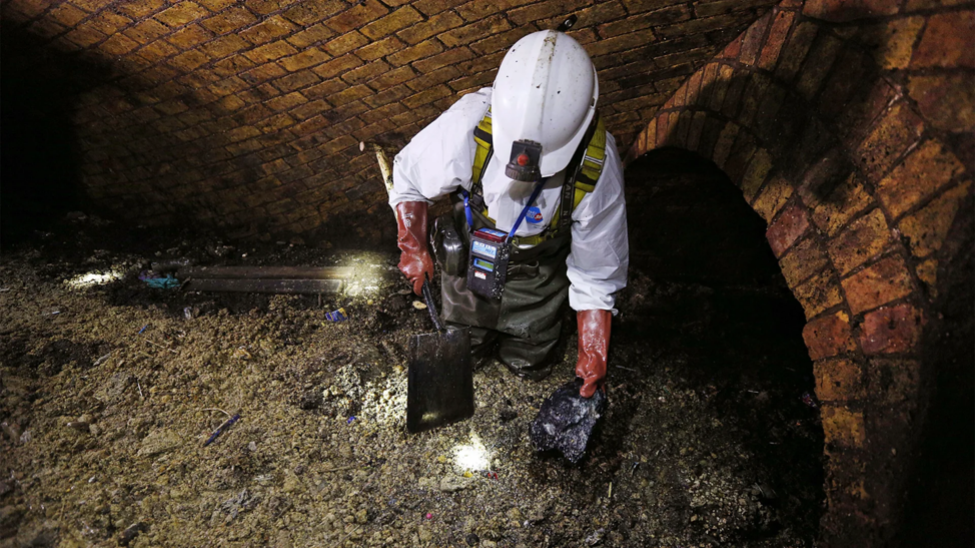
Figure 3: Personnel working in the underground sewer system must be adequately protected and have sensors to detect toxic gases, (Credit: Getty Images- https://www.bbc.com/future/article/20260511-fatbergs-are-taking-over-city-sewers-can-we-stop-them)
Occupational Hazards of Fighting Fatbergs
Some of the risks that utility personnel face in underground sewage systems include exposure to hazardous gases, infectious pathogens, physical hazards, and debris, as well as a challenging work environment.
Confined spaces: Sewers are classified as permit-required confined spaces by the US Occupational Safety and Health Administration (OSHA) because they have a hazardous atmosphere with a potential for suffocation and pose serious health and safety risks due to chemical and physical hazards. The working conditions can also be difficult due to noise, odors, humidity, and temperature. Several workers’ deaths are reported in the sewers. Employers are required by law in several countries to ensure that personnel entering and working in permit-required confined spaces follow a recommended procedure to protect their health and safety; see Figure 3.
Hazardous gases: The hazardous gaseous conditions that workers can encounter in sewers include oxygen deficiency, flammable, asphyxiant, and toxic gases. In the USA, toxic gases cause 56% of fatalities in confined spaces. The workers can encounter the so-called “sewer gases” such as methane, hydrogen sulfide, carbon monoxide, carbon dioxide, ammonia, phosphine, and nitrous oxide, produced by the decomposition and various chemical reactions in the organic matter and other wastes. The gases accumulate to dangerous levels in sewers due to a lack of ventilation.
- Oxygen (O2) levels can fall to below 19.5% because of use by microbes for respiration and chemical reactions, and can lead to impaired cognitive functioning, unconsciousness, and, in extreme cases, death in people.
- Flammable gases such as methane, hydrogen sulfide, ammonia, and phosphine present above their Lower Explosive Limit (LEL) and below their Upper Explosive Limit (UEL) can cause fires and explosions. The concentration at which each gas becomes flammable differs. For example, it is between 5 to 15% for methane.
- Toxic gases present in sewers are hydrogen sulfide (H2S), ammonia, nitrous oxide, and phosphine. They are poisonous and have acute and chronic health effects. H2S exposure at high concentration (>100 ppm) can be fatal within seconds at 1000 ppm (parts per million).
- Gases that are not toxic but have asphyxiant effects are carbon monoxide, carbon dioxide, and methane, because their accumulation displaces oxygen, creating an oxygen-deficient environment.
Infectious pathogens: Sewers carry human waste, decaying organic matter, and medical waste that can harbor pathogens such as E. coli, Listeria, viruses, fungi, and parasites. People can be exposed to pathogens when they wade through sewage to break up fatbergs.
Physical risks: Workers may encounter hazards such as slips, trips, falls, and muscle stress while moving or working with heavy machinery underground. Medical waste can contain sharp hypodermic needles and broken glass, which can also pose a danger to personnel cleaning fatbergs.
Protecting Workers Fighting Fatbergs
Preventing fatberg formation is the best solution, and it can start with installing grease traps in restaurants, meat processors, and food sellers to capture fat and remove it before it enters the sewers. Until such measures reduce fat, grease, and oil inputs into sewers, personnel who must deal with fatbergs must use proper personal protective equipment and follow recommended procedures; see Figure 3.
Employers must ensure that personnel working in sewers, which are permit-required confined spaces, use adequate personal protective gear, including full-body suits, goggles, and self-contained breathing apparatuses, to protect them from exposure to hazardous chemicals and pathogens. Workers are required to use gas analyzers before entering the sewers. Since workers have to spend hours in the sewer system breaking up fatbergs, they should also use portable gas detectors for continuous air monitoring of potentially hazardous gases. Industrial blowers to pump fresh air to supply oxygen and dilute toxic gases are also necessary. Utilities can consider using Interscan gas detectors. The company produces gas detectors for most of the sewer gases. Most importantly, its portable GASD IS® is specifically designed for Intrinsic Safety for flammable and explosive environments present in sewers.
Contact Interscan for more information about our gas detectors, including the new GASD IS®.
Sources
BBC. (2018, Sept 13). Town’s drains ‘placed on diet’ to tackle greasy fatbergs. Retrieved from https://www.bbc.com/news/uk-scotland-edinburgh-east-fife-45494943
Clarke, L. (2026, May 12). ‘Fatbergs’ are taking over city sewers – scientists are fighting back. Retrieved from https://www.bbc.com/future/article/20260511-fatbergs-are-taking-over-city-sewers-can-we-stop-them
Engelhaupt, E. (2017, Aug 16). Huge Blobs of Fat and Trash Are Filling the World’s Sewers. Retrieved from https://www.nationalgeographic.com/science/article/fatbergs-fat-cities-sewers-wet-wipes-science
Johnson County Kansas. (n.d.). The Hazards of Fats, Oils, and Grease. What is FOG? Retrieved from https://www.jocogov.org/department/wastewater/residential-customers/hazards-fats-oils-and-grease
Johnston, C. (2017, Oct 11). Fatbergs: 90% of London restaurants are contributing to problem. Retrieved from https://www.theguardian.com/environment/2017/oct/11/fatbergs-london-restaurants-oil-food-grease-traps
OSHA. (n.d.). Confined Spaces in Construction: Sewer Systems. Retrieved from https://www.osha.gov/sites/default/files/publications/OSHA3789.pdf
Rosen, A. Fatbergs: Menaces to Public Works and Public Health. Retrieved from https://publichealth.jhu.edu/fatbergs-remind-us-of-water-infrastructures-critical-role
Wallace, T., Gibbons, D., O’Dwyer, M., & Curran, T. P. (2017). International evolution of fat, oil and grease (FOG) waste management–A review. Journal of environmental management, 187, 424-435.