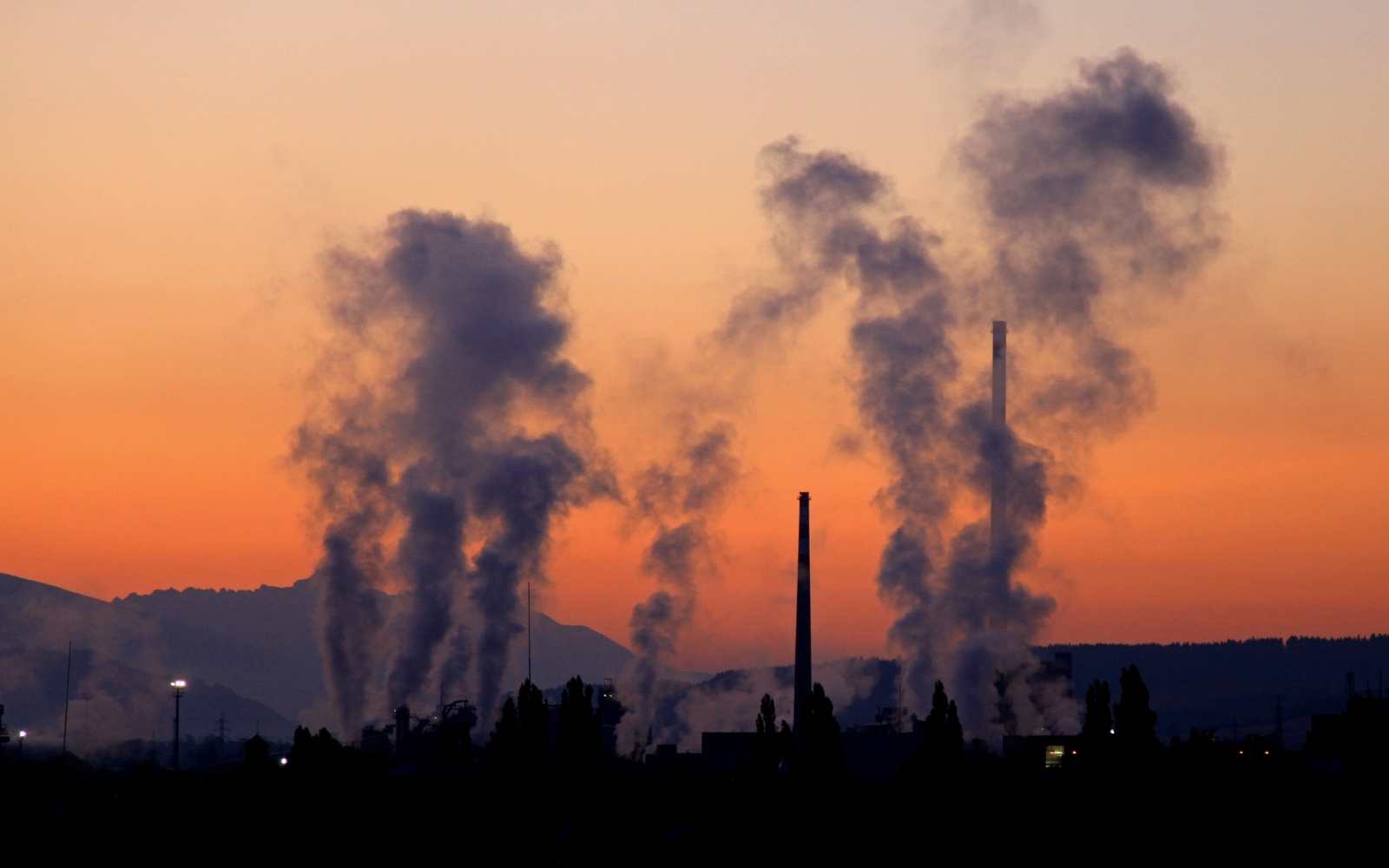
- The costs of industries’ noncompliance with pollution controls are borne by their workers, neighboring communities, governments, and the environment.
- The costs can be economic, ecological, and health-related problems.
- Industries should consider the ethical advantages of controlling pollution that can enhance their reputation and profits.
While industries are owned by a few, the pollution they produce affects all 8.3 billion people on Earth, especially the workers in these industries. There are many compelling reasons to control industrial pollution. These are not limited to just protecting the environment. This article discusses the various financial, environmental, and health concerns from industrial pollution that companies can reduce.
Industries Continue Polluting the Environment
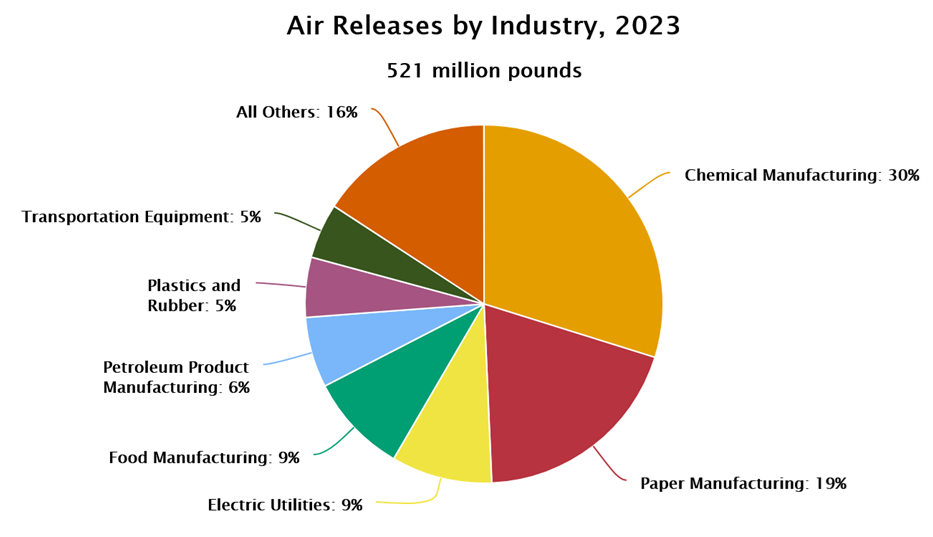
Figure 1: “Air releases of chemicals by industries in 2023, EPA. (Image credits: https://www.epa.gov/trinationalanalysis/air-releases-chemical-industry)
Industries deal with thousands of chemicals, which can be gases, liquids, or solids. They are used as raw materials or produced as byproducts of industrial processes. These are released into the environment as flue gases, effluents, and solid waste either as part of the process or due to accidental leaks. These pollutants spread far and wide, affecting people and the environment beyond the industrial premises.
Air pollutants, in particular, can travel far from their sources. Higher greenhouse gas emissions from some countries have caused global warming and climate change that affect the entire globe and vulnerable communities that neither emit pollutants nor live in the same country.
According to the US Environmental Protection Agency (EPA), the major American air polluters in 2023 were chemical manufacturers releasing ammonia and ethylene, followed by paper manufacturers releasing methanol, and electric utilities releasing sulfuric acid and ammonia; see Figure 1.
Subscribe to receive our monthly round-up of articles.
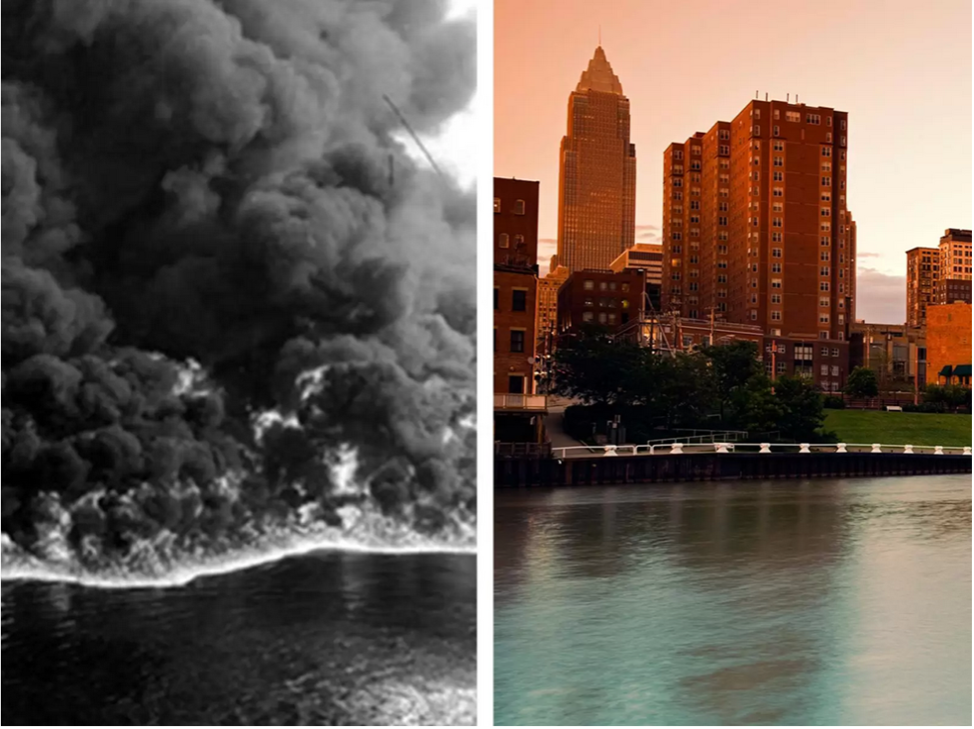
Figure 2: “Ohio’s Cuyahoga River was once so polluted that it caught fire (left) numerous times. A 1969 fire helped spur the country to action on the environment, and the river is making a comeback thanks to transformational environmental protections,” EDF. (Image credits: https://www.edf.org/why-we-need-strong-epa
Regulations can play a crucial role in bringing down pollution. In 1969, industrial pollution of air and waterways in the USA caused multiple fires in Ohio’s Cuyahoga River, bringing environmental protection into the public spotlight. The river is now clean again, spurred by regulations and public concern, as shown in Figure 2.
Regulations now exist across the globe to control air, water, and soil pollution and to limit greenhouse gas emissions. The strength of the regulations can vary by country and region. In most countries, the standards and regulations are insufficient to protect the public and the environment. Even in countries with stricter regulations, studies show that non-compliance with rules is profitable for industries, despite paying fines for failing to limit pollutant releases into the environment, so environmental degradation continues, even though the negative effects of pollutants are well known and in the public domain. A 2023 Yale study found that 36% of firms in the USA violated the Clean Air Act.
Though companies do have short-term gains, non-compliance can have several detrimental effects on their business in the long run. Moreover, companies do have a social and ethical responsibility to their workers, their neighboring communities, and beyond, to cut pollution and its harmful effects. People near and far from industries incur costs not only in financial terms but also due to health and environmental degradation.
Some of the major costs borne by businesses, society, and the environment due to air pollution that industries do not address are listed below.
Health of Workers and Communities
The most common air pollutants that are harmful to health are particulate matter (PM: fine and coarse), carbon monoxide, ozone, nitrogen dioxide, and sulfur dioxide. PM is made of mineral dust, water, and chemicals such as ammonia, sodium chloride, nitrates, sulfates, and black carbon. Most of these are produced by combustion of fossil fuels for energy, transport, and heating. Since air pollutants spread far from their sources, they pose a universal problem.
Any organ in the body can be affected by air pollutants, as they can enter the bloodstream through the air breathed in due to their minute size. According to the World Health Organization (WHO), air pollutants can cause systemic inflammation, carcinogenicity, adverse pregnancy outcomes, diabetes, and mortality. It is most associated with pulmonary, heart, and neurological diseases.
New studies now show that air pollutants such as particulate matter (PM2.5) reduce cognitive performance and intelligence quotient (IQ), with effects beginning at birth. A decrease in brain function of only a few points at the individual level has a substantial effect at the population level. Lower- and middle-income countries with higher pollution levels and fewer mitigation resources suffer most. It can affect education proficiency, productivity, and economic achievements.
Society: The WHO reports that the air 99% of people breathe is not clean. The United Nations Environment Program (UNEP) notes that air pollution is the biggest public health threat and is responsible for 8 million premature deaths globally.
Children are particularly vulnerable to air pollution, which poses one of the highest risks to their health because they have developing lungs, consume more air than adults, and spend more time outdoors. A 2026 CBS report states that in the USA, 44% of the population and nearly half of the children and teenagers breathe unhealthy air.
People with respiratory problems and the elderly are other groups more prone to the health effects of air pollution.
Businesses: Air pollution’s health risks also affect businesses and industries. Industrial facilities that do not monitor and maintain hazardous gas levels below permitted limits risk causing acute and chronic health problems among their workforce, leading to increased staff absences and lower productivity.
Economic Costs
Pollution has hidden economic costs borne by people working and living in the vicinity of industries, as well as by governments, locally and globally, due to climate change. The amounts that industries earn from non-compliance are low compared to the economic costs to society and governments of cleaning up pollution and of ignoring laws.
People: Workers and people living near industries are less productive and report increased absences from work due to chemical pollution, accidents, and fires, which can cause acute and chronic health problems and lower life expectancy. Consequently, people work and earn less. Moreover, people are increasing their spending on health and social care, which lowers family and community income standards.
Countries: Air pollution causes premature deaths, affecting countries’ economies. For example, the Confederation of British Industry estimates that if the UK prevents the 17,000 annual premature deaths from air pollution, it could benefit the country by £1.6 billion each year. Air pollution is estimated to cost the European Union €600 billion, or 4% of its GDP, annually. Governments have to spend money on cleaning the air polluted by industries.
Globally: The Clean Air Fund reports that 1.2 billion workdays are lost annually due to air pollution and that the resulting costs total $6 trillion. It is a 5% decrease in global GDP due to lower life expectancy, work productivity, and health impacts.
Businesses: Similarly, companies that do not control pollution, especially hazardous gases, which are, in most cases, hard to detect as they are colorless and odorless, have lower productivity due to the absence of workers due to health issues, and higher costs due to facilities damaged by accidents, fires, explosions, or gradual corrosion by chemicals. Companies also have trouble recruiting in polluted areas and must pay higher wages. Non-compliance can erode trust and motivation among employees, which can affect a company’s finances. Controlling pollution can also spur innovation, giving businesses a competitive edge. Moreover, businesses risk losing a competitive edge in attracting investment and customers when their non-compliance becomes public, as people are increasingly focused on sustainability and green products and services.
Hence, pollution has hidden financial costs for everyone, including the polluting industries.
Environmental Degradation
Air pollution has several negative environmental impacts, including climate change, acid rain, and reduced agricultural yields.
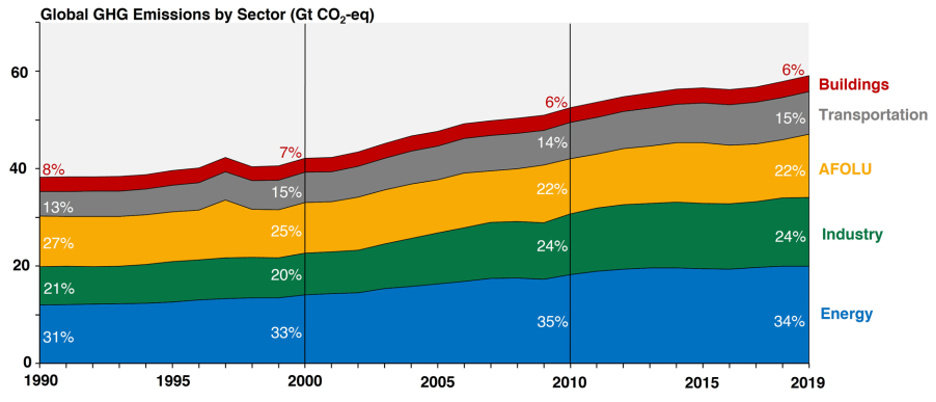
Figure 3: “Global greenhouse gas emissions according to economic activities, based on 2019 emissions data taken from IPCC (2022), EPA. (Image credits: https://www.epa.gov/ghgemissions/global-greenhouse-gas-overview)
Air pollution
According to UNECE, air pollution has reduced crop yields by 3-16% in several staple crops like soy, wheat, and corn. Air pollutants such as ozone, nitrogen oxides, PM, volatile organic compounds (VOCs), sulfur oxides, and polycyclic aromatic hydrocarbons (PAHs) can settle on soil or remain in the air, inhibiting plant growth and health.
Acid rain from nitrogen and sulfur oxides can reduce biomass in forests and agriculture and harm animals. Hence, raw material availability across industries can be reduced, and income for industries directly involved in agriculture and forestry can be lowered. For people and society, it also means reduced food security.
Climate change
Greenhouse gas (GHG) emissions from various industries, including carbon dioxide, methane, nitrous oxide, and fluorinated gases, have increased significantly over the last 150 years. Other GHGs are ground-level ozone, water vapor, and aerosols. GHGs trap heat from the sunlight and raise global temperatures. The major sectors emitting GHGs are industrial sectors (such as electricity and heat production), manufacturers (chemicals, metallurgical, and mineral processing), agriculture, forestry and land use, transportation, and buildings, as shown in Figure 3.
Climate change has resulted in rising global temperatures, melting of sea ice, and rising sea levels. It has increased the intensity of heat waves, droughts, wildfires, and floods, as well as the frequency of extreme weather.
Governments, society, and businesses: Climate change causes damage and reduces productivity and growth. The EU states have been incurring 2.9% economic losses due to climate and extreme weather; for example, increased temperatures have led to 0.98% fewer working hours per staff member in industries that involve outdoor work between 2016 and 2019 compared to 1965 and 1944. By 2050, climate change is expected to raise food prices by 20% and reduce the EU’s GDP by 7%. Businesses will also be affected, incurring $1.5 trillion in lost productivity costs.
Climate change has increased the frequency of extreme weather events, raising the risks of accidents, damage, and economic costs across industries. Reduced biomass availability due to wildfires and declines in agricultural yields can affect industries that depend on these sources for raw materials. Weather is already responsible for 3.7% of accidents across industries, resulting in deaths, injuries, and damage.
Future generations: Children are at increased risk due to climate change. Children are more likely to be exposed to 45% more heatwaves, 38% more floods, 10% more wildfires, and 28% more crop failures, which increases the risk of malnutrition, fewer school days, and negative impacts on their futures.
Technology for Accountability
Complying with government and international regulations is a legal requirement. Even though companies may save some money in the short term by defying these rules, they should consider the ethical consequences of non-compliance for their reputation among employees, consumers, and investors. Very few existing regulations are rigorous enough to fully protect people and the environment, so businesses that proactively reduce emissions from their facilities can gain a competitive edge over rivals and build positive associations with their communities.
Air pollution can be controlled and reduced by companies through technology. Since industries are responsible for pollutant emissions, they should be proactive in controlling them. Businesses should reduce emissions at smokestacks, improve waste management, and use clean fuel instead of fossil fuels.
One of the essential ways to control emissions is to monitor their spaces for hazardous and polluting gases to detect leaks and to ensure levels do not approach or exceed permitted levels. It not only keeps workers, the environment, and the surrounding communities safe but also allows businesses to take remedial action to prevent problems from damaging their facilities, which can result in downtime, reduced production, and lower profits.
Interscan produces fixed gas analyzers for continuous monitoring and portable gas devices to detect over 20 hazardous gases, suitable for all industries.
Contact us for information on Interscan gas devices, trusted even by NASA for gas detection.
Sources
Atkinso, N. (2023, June 1). Profiting from Pollution. Retrieved from https://www.yalejreg.com/bulletin/profiting-from-pollution/
Clean Air Fund. (n.d.). Economy and air pollution. Retrieved from https://www.cleanairfund.org/theme/economics/
EDF. (2025, March 13). Why we need a strong EPA. Retrieved from https://www.edf.org/why-we-need-strong-epa
EPA. (2025, Dec 30). Global greenhouse gas overview. Retrieved from https://www.epa.gov/ghgemissions/global-greenhouse-gas-overview
IESEInsight. SustainAbilities. Retrieved from https://insightreports.iese.edu/en/sustainabilities-report/
Manono, B. O., Sadiq, F. K., Sadiq, A. A., Matsika, T. A., & Tanko, F. (2025). Impacts of Air Quality on Global Crop Yields and Food Security: An Integrative Review and Future Outlook. Air, 3(3), 24. https://doi.org/10.3390/air3030024
NASA. (n.d.). The Effects of Climate Change. Retrieved from https://science.nasa.gov/climate-change/effects/
NRDC. (2025, Oct 22). Fossil Fuels: The Dirty Facts. Retrieved from https://www.nrdc.org/stories/fossil-fuels-dirty-facts
Pham, H., Ha, V., Le, H. H., Ramiah, V., & Frino, A. (2024). The effects of polluting behaviour, dirty energy and electricity consumption on firm performance: Evidence from the recent crises. Energy Economics, 129, 107247.
University of Birmingham. (2026, March 11). Air pollution harms brain health – existing standards may fall short. Retrieved from https://www.birmingham.ac.uk/news/2026/air-pollution-harms-brain-health-existing-standards-may-fall-short
WHO. (n.d.). Air quality, energy and health. Retrieved from https://www.who.int/teams/environment-climate-change-and-health/air-quality-energy-and-health/health-impacts
WHO. (2024, Oct 24). Ambient (outdoor) air pollution. Retrieved from https://www.who.int/news-room/fact-sheets/detail/ambient-(outdoor)-air-quality-and-health